For people encountering the concept of “website promotion” for the first time, choosing the right SEO specialist can be quite a difficult task. I will try to provide several tips and recommendations for choosing the best specialist and evaluating their performance.
Why Is It Difficult to Choose an SEO Specialist?
When a client looks for a contractor to promote their website, they encounter many unfamiliar terms, such as “indexing,” “backlink profile,” “keyword research,” and so on. This entire stream of SEO-specific terminology only complicates the process of choosing a specialist. When you try to assess an SEO professional’s competence solely through their answers to your questions, you delve deeper and deeper into unfamiliar words, while understanding everything on your own requires a great deal of time.
SEO specialists understand this too, and some successfully take advantage of it, because the main thing is to create the impression of being a qualified professional. Therefore, when communicating with a specialist, first of all pay attention to their ability to explain things in clear, simple language that does not leave you with more and more questions.
When Should You Look for an SEO Specialist?
If you already have a website and want to receive traffic from search engines, there are no specific conditions that should prompt you to look for an SEO specialist. The only exception is a seasonal niche: in this case, you should look for a specialist 3–4 months before the start of seasonal demand, because SEO optimisation delivers its first results after several months of work. This will give you time to improve your website’s rankings and attract new customers during the high season.
If you are at the website planning or development stage, it is better to involve an SEO specialist in the process as early as possible. At the development stage, an SEO specialist can provide a number of important technical recommendations to ensure the website is built correctly for search engines. This will be much less expensive than implementing technical fixes and recommendations on a completed website. At this stage, it is also much easier to plan the potential structure of categories and service pages, add important SEO blocks to page design layouts, and so on.
Another benefit of involving an SEO specialist during development is that when the website is launched publicly, you will already have SEO content prepared for your target keywords, which will significantly speed up the process of gaining rankings for relevant queries.
What Should You Look for When Choosing an SEO Specialist?
The most important factors when choosing an SEO specialist are the following:
Experience in Your Niche
Ask the SEO specialist whether they have experience promoting websites in your industry. The more similar projects the specialist has worked on, the more they know about successful promotion methods, as they have repeatedly studied top competitors. Of course, this does not apply to every niche. For example, the differences between promoting an online appliance store and an online clothing store are minimal. However, there are specific industries that require a special approach, including fintech, crypto, healthcare, and casinos.
Reviews
Having reviews about working with a specialist is a good sign. If a specialist has many reviews, it means their approach and methods genuinely work. Pay attention to both positive and negative reviews, and try to find reviews of the contractor across different sources.
An Individual Approach to the Project
When an SEO specialist is interested in working with you, their answers will be focused on specific details of your project, such as identified issues or promotion recommendations. If a specialist is interested in promoting your project, they will study its strengths and weaknesses in advance.
How to Evaluate an SEO Specialist’s Work
Today, there are many tools that make it possible to assess how effective an SEO specialist’s work is. The main metrics and KPIs to focus on are:
Metric Trends in Google Search Console
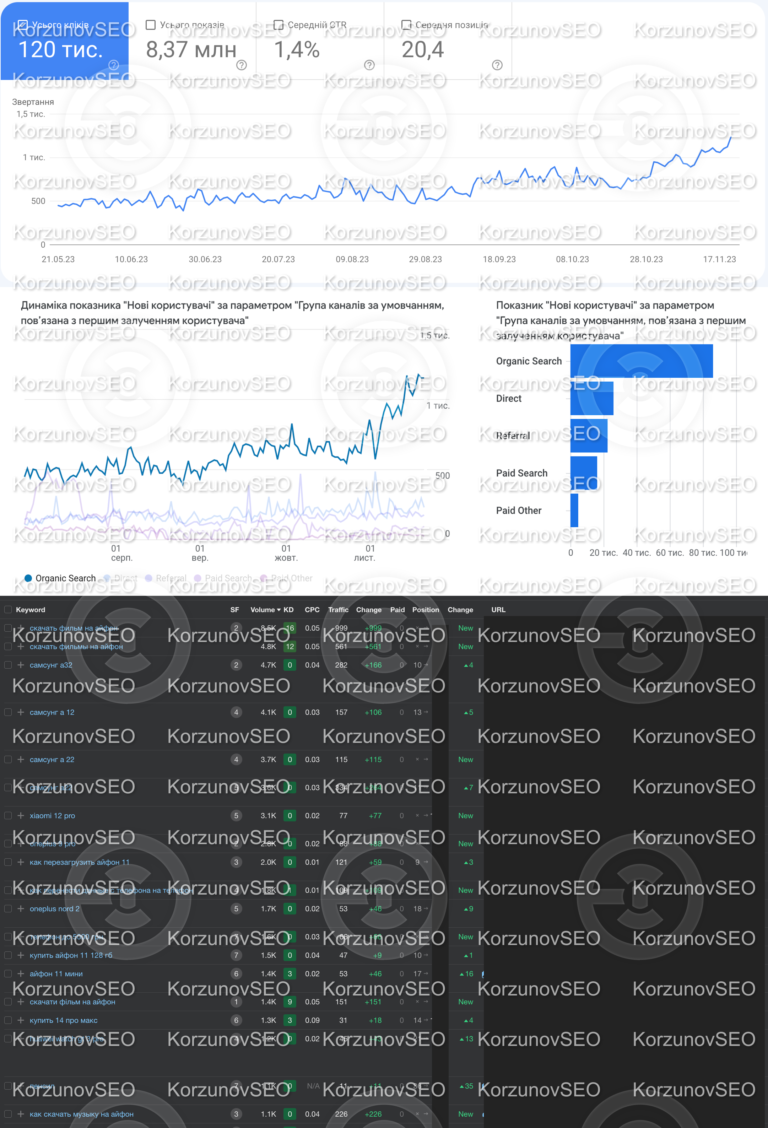
Google Search Console displays organic traffic trends across four metrics:
- clicks from search results;
- the number of impressions of website pages in search results for queries;
- CTR (the ratio of impressions to clicks);
- the website’s average position for queries.
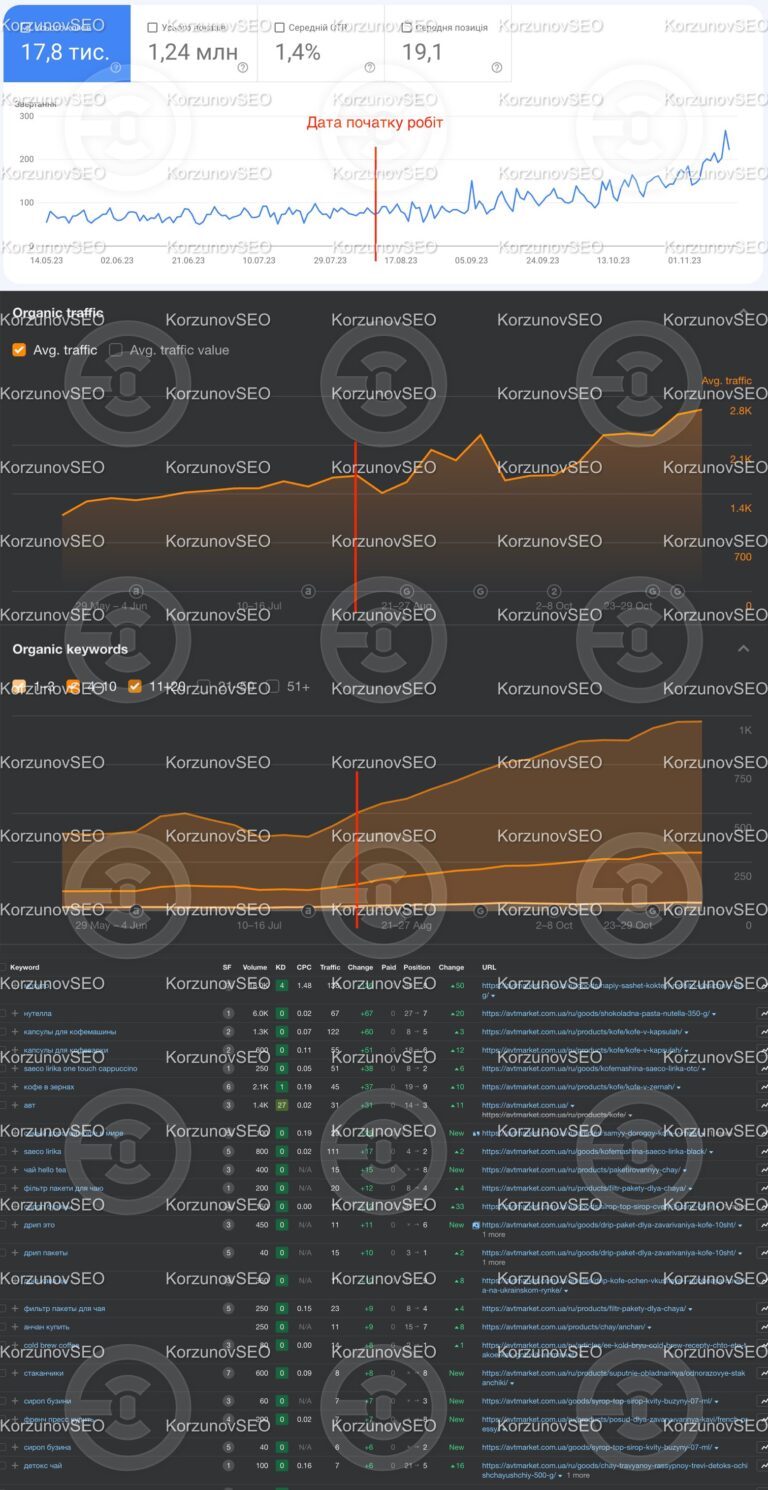
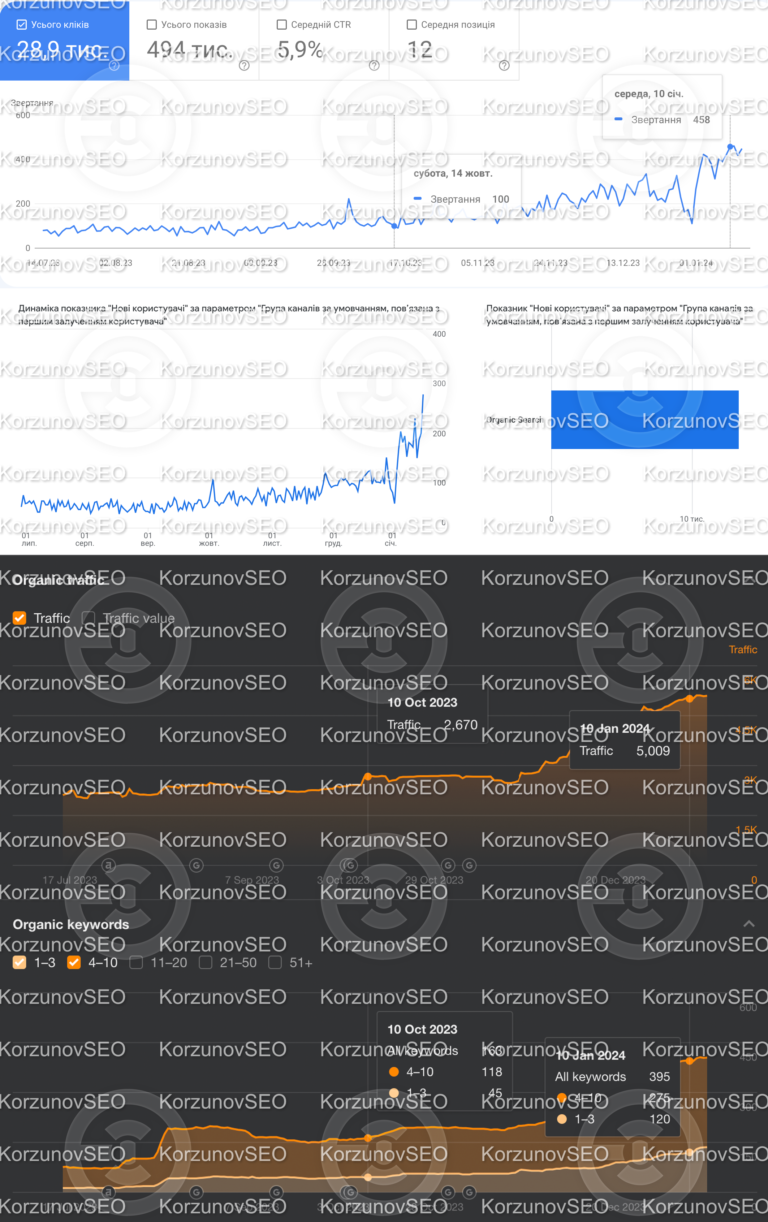
By tracking these metrics over time, you can see whether the website is growing or declining in search.
Organic Traffic Trends in Google Analytics
The second important tool is Google Analytics. It shows how many organic users came to your website, as well as the behavioural metrics of those users. These include average session duration, the number of pages viewed per session, bounce rate, and so on.
Important: Google Analytics displays only traffic data. Rankings and other SEO metrics need to be reviewed in other tools.
Ranking Trends for the Keyword Set
The goal of SEO optimisation is to bring a website to the top positions for target keywords. Today, there are many tools that allow you to track a website’s rankings for relevant queries. The number of queries ranking in the top 5, top 10, and top 20 should increase every month.
Website Visibility in Search Results
The search visibility metric reflects the overall movement of a project in search because, in addition to the queries in the keyword set, a website may rank for other queries as well. The visibility metric shows the number of traffic-generating queries ranking in the top 20.
Page Indexing Trends
If you bring an SEO specialist onto a project from scratch, the first metric you can monitor is the number of pages in the index. Rankings and traffic begin to appear after several months of project optimisation. At the start, you can monitor how the SEO specialist improves indexing and how many pages have appeared in the index as a result of the work completed.
Conclusion
Choosing an SEO specialist is quite a difficult task. This article describes the key points that will help you choose a responsible contractor. You should also understand that SEO optimisation is a fairly long process that delivers results only after 3–4 months of steady, continuous work. If your goal is to reach top positions for high-volume queries, results may take more than 10 months. Everything depends on search competition for the queries and the promotion budget.
If you would like to discuss your project, choose a convenient method of contact from those listed below.