I help online auto parts stores get customers from Google through technical optimization, a proper catalog structure, keyword research, improvements to categories, filters, product pages, brand pages, part numbers and internal linking.
In the auto parts niche, SEO depends especially heavily on catalog structure. A user may search for a part by name, part number, brand, vehicle make, model, generation, component type, compatibility or problem. If the website cannot cover these scenarios correctly, a large assortment by itself will not bring organic traffic.
The task of SEO is to make sure Google sees a clear system of pages, while the buyer quickly finds the needed part, understands compatibility, availability, price and delivery terms, and can place an order without unnecessary doubts.
Auto Parts Store SEO from an Independent Specialist
I work with online auto parts stores as an independent SEO specialist: I analyze the website, find technical and structural limitations, prepare a work plan and help control implementation. In this niche, it is important not just to optimize categories, but to understand how users search for parts and how the catalog answers that demand.
Before promotion starts, I check which pages get impressions and clicks, how categories and product pages are indexed, and whether there are landing pages for vehicle makes, models, brands, components and popular groups of parts. I separately review filters, parameters, duplicates, canonical tags, pagination, speed, structured data and product page quality.
After the analysis, it becomes clear what limits growth the most: technical errors, weak structure, missing landing pages, chaotic filters, copied descriptions, indexation problems or the lack of proper analytics for organic orders.
When an Auto Parts Store Needs SEO
SEO promotion for an auto parts store should be launched when the website is already running, but organic search does not generate stable sales or visibility is limited to only part of the assortment. Often a store has thousands of products, but Google sees them as a set of similar pages without a clear structure.
Promotion is relevant if:
- auto parts categories get almost no clicks from Google;
- there are no proper pages for vehicle makes, models, components and part groups;
- product pages are poorly indexed or compete with each other;
- filters by brand, make, model, year or characteristics create duplicates;
- part numbers, alternatives and compatibility are not used in the SEO structure;
- meta tags are generated from templates and do not help distinguish pages;
- the website depends on advertising and price aggregators, while organic traffic barely grows;
- after a CMS change, catalog import or redesign, rankings and clicks dropped;
- it is unclear which tasks should be assigned to a developer, content manager or SEO contractor.
SEO helps turn an auto parts catalog into a clear search structure: highlight important landing pages, remove technical noise, strengthen product pages, configure indexation and connect categories, brands, vehicle makes and informational materials with each other.
Features of SEO for Auto Parts Websites
Auto parts differ from many ecommerce niches because one product can be searched for in dozens of ways. A user may know the exact part number, look for an alternative, choose a part by vehicle make and model or describe a problem: “brakes squeak”, “starter does not work”, “oil filter for Toyota Corolla”.
For auto parts store SEO, it is important to consider:
- categories by part types: brake system, suspension, filters, electrical parts, body parts, oils and fluids;
- structure by vehicle makes and models;
- brand and manufacturer pages;
- part numbers, OEM numbers and alternatives;
- compatibility of parts with vehicles;
- availability, price, delivery and shipping times;
- product pages with characteristics and clear descriptions;
- filters that can be useful for the user but dangerous for indexation;
- informational pages that help users choose a part and are connected with commercial categories.
If this structure is not controlled, the website can quickly accumulate thousands of duplicates: identical products in different categories, filter parameters, sorting pages, intersections of makes, models and brands. That is why the technical part in this niche is just as important as semantics and content.
Which Pages of an Auto Parts Store Should Be Promoted
The main SEO potential of an online auto parts store is found in categories, subcategories, brands, pages by vehicle makes and product pages. The homepage usually cannot cover all demand variations, so a multi-level structure needs to be designed.
The following pages can participate in promotion:
- main auto parts categories;
- subcategories by vehicle components and systems;
- vehicle make pages;
- vehicle model and generation pages;
- auto parts brand pages;
- pages for popular product groups;
- product pages with part numbers and alternatives;
- landing pages for compatibility if they cover real demand;
- articles and guides: how to choose brake pads, when to replace a filter, how alternatives differ from original parts;
- delivery, payment, return, warranty and part selection pages.
Not every filter or intersection should be opened for indexation. If a page has no demand, does not provide a unique assortment and only repeats existing categories, it can interfere with promotion. But if a combination covers a real query, it can be used as an SEO landing page.
What I Check Before Starting SEO
Before work starts, I conduct an SEO audit of the auto parts store to understand where the website loses visibility. In this niche, it is especially important to check not only meta tags and texts, but also the technical logic of the catalog.
I check:
- which categories, brands, vehicle makes and products are indexed in Google;
- whether there are duplicates caused by filters, sorting, parameters, internal search and pagination;
- how canonical tags, robots.txt and sitemap.xml are configured;
- whether there are separate landing pages for important groups of parts;
- whether part numbers, alternatives, brands and compatibility are used;
- how unique title, description and H1 are;
- how product pages are presented;
- whether characteristics, availability, price, delivery terms and warranty are filled in;
- whether category texts are useful;
- how internal linking works between categories, brands, vehicle models, articles and products;
- how quickly the website loads on mobile devices;
- whether analytics are configured for orders, inquiries, calls and part selection requests.
After the check, it is possible to form an SEO strategy: which pages to strengthen, which ones to create, which filters to close from indexation, which meta templates to change and which tasks to pass to a developer.
Typical SEO Problems of Online Auto Parts Stores
Auto parts stores often have a large catalog, but that catalog becomes the source of problems. If products are imported from price lists, product pages and categories can look too similar, while filters and parameters create too many technical pages.
The most common obstacles are:
- duplicate pages caused by filters, sorting and URL parameters;
- identical product pages with minimal descriptions;
- incomplete characteristics and missing compatibility information;
- weak brand pages;
- no landing pages for vehicle makes, models and popular product groups;
- identical title and description tags across categories and products;
- chaotic indexation of search and part selection pages;
- poor internal linking between categories, brands and products;
- outdated or unavailable products without a clear handling logic;
- a slow mobile version caused by a heavy catalog, scripts or images.
If these problems are not fixed, the store may have a large assortment but receive little organic traffic. In auto parts, the technical structure, product data and commercial pages must work together.
What Work Is Included in Auto Parts Store SEO
SEO promotion for an online auto parts store is built around the technical base, catalog structure, semantics, product pages and indexation control. The order of work depends on the current state of the website and the competitiveness of the niche.
The work may include:
- a technical website audit;
- collecting and clustering semantics by categories, brands, vehicle makes and groups of parts;
- analysis of competitors in search;
- planning the structure of categories, subcategories and landing pages;
- configuring indexation of filters, sorting, pagination and parameters;
- preparing technical tasks for a developer;
- optimizing title, description and H1;
- improving category and brand texts;
- improving product pages;
- checking Product and BreadcrumbList structured data;
- internal linking between categories, vehicle models, brands, articles and products;
- setting up analytics and order tracking;
- regular monitoring of dynamics in Google Search Console.
I do not start promotion with the same list of tasks for every project. If the website is poorly indexed, the technical part needs to be fixed first. If the catalog is technically accessible but does not cover demand, structure and semantics become the priority. If pages already exist but do not sell, product pages, commercial blocks and trust need to be strengthened.
Content for an Auto Parts Store
Content in the auto parts niche should help the buyer choose the right part. It is not enough to write a generic text about a category. The user wants to understand compatibility, characteristics, differences between original and alternative parts, delivery time, warranty and the option to get help with selection.
For categories, you can use:
- a short description of the product group;
- selection recommendations;
- an explanation of important characteristics;
- links to brands, vehicle makes and related categories;
- answers to frequently asked questions;
- information about delivery, payment, returns and warranty;
- a block about selecting parts by vehicle or part number.
For product pages, part number, brand, compatibility, characteristics, photos, availability, price, alternatives, delivery and return terms are important. The clearer the product page is, the fewer doubts the buyer has and the higher the chance that they will place an order on the website.
How to Understand That SEO Is Working
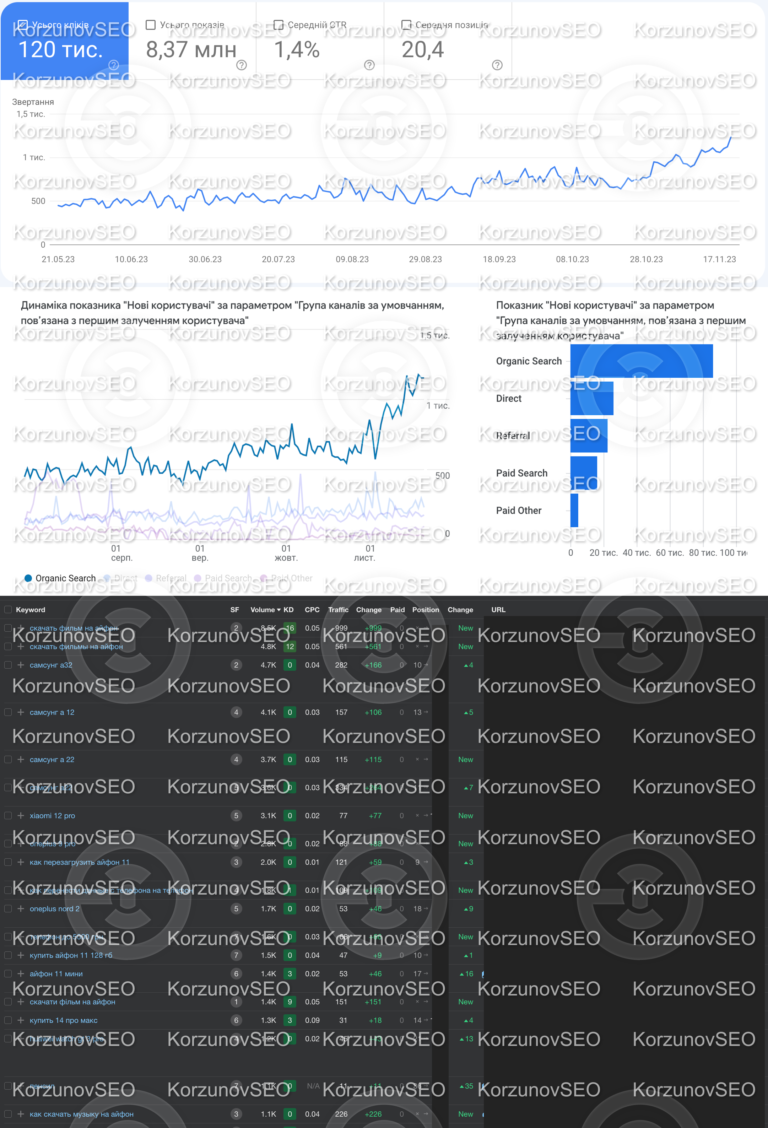
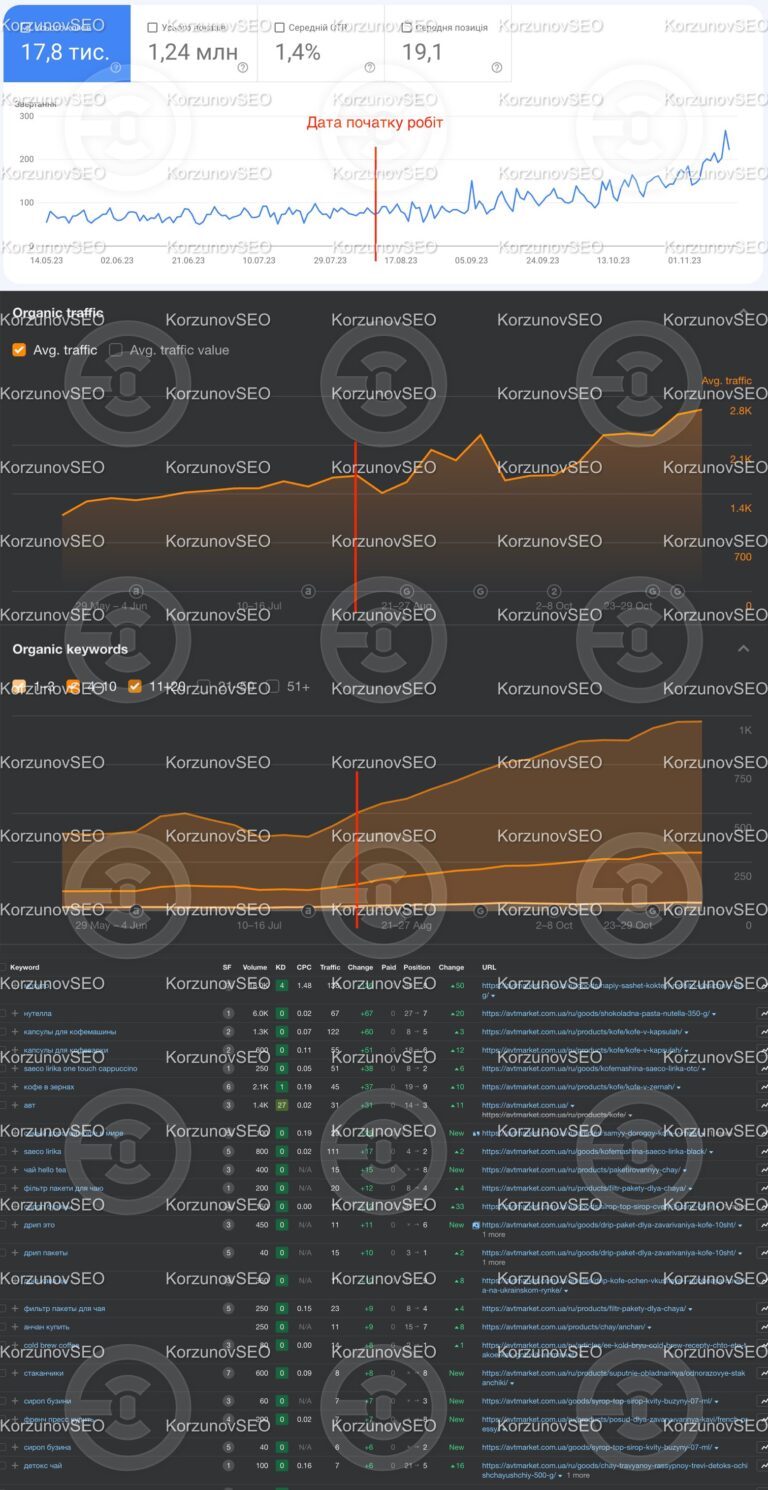
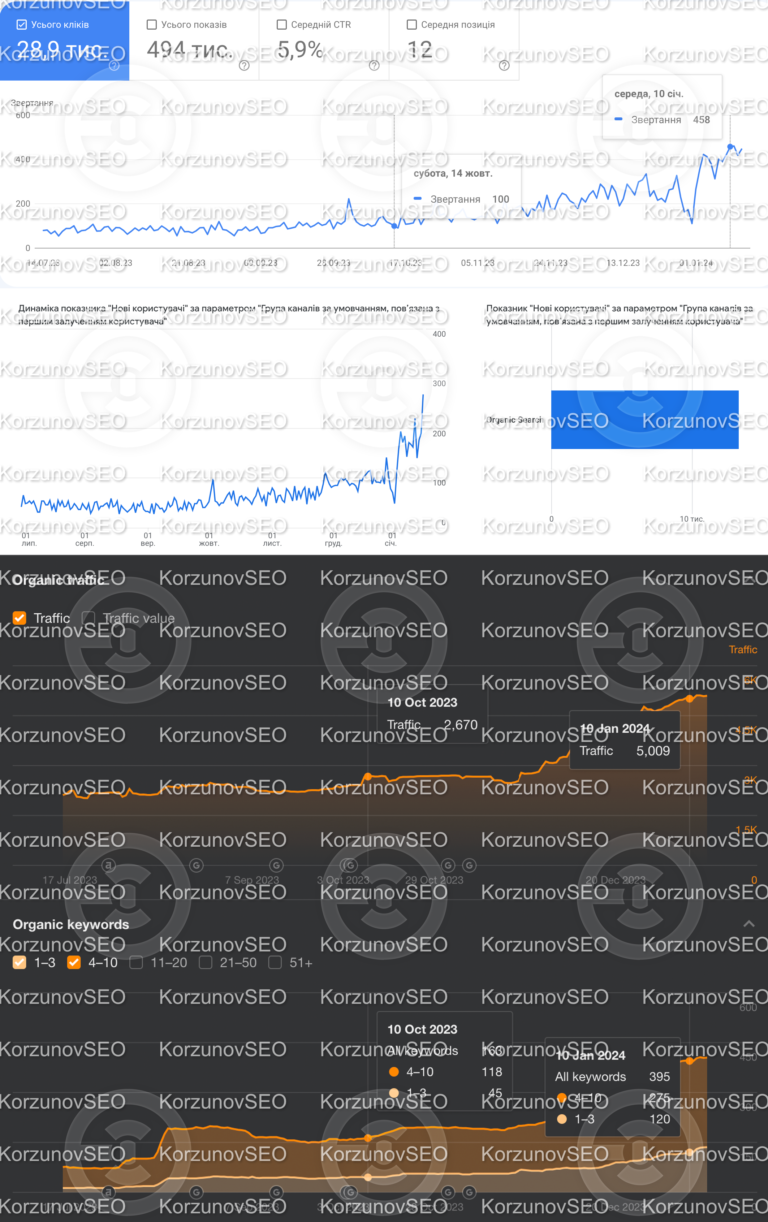
The result of promoting an auto parts store should not be evaluated only by rankings. It is important to see whether catalog visibility is growing and whether organic search brings real orders.
I look at:
- growth in impressions and clicks in Google Search Console;
- dynamics for priority categories and brands;
- traffic appearing on vehicle make, model and part group pages;
- growth of queries by part numbers, alternatives and compatibility;
- the number of organic orders, inquiries or calls;
- user behavior on categories and product pages;
- indexation of important pages;
- reduction of duplicates and technical noise in search.
Good SEO should be transparent. The store owner should understand which tasks have been implemented, why they are needed, which pages are being strengthened and how this affects traffic, inquiries and sales.
Cost of SEO Promotion for an Online Auto Parts Store
The cost of SEO promotion for an auto parts store depends on the catalog size, CMS, product data quality, number of categories, brands, vehicle makes, website condition and competition. Without analyzing the website, it is impossible to name the price correctly, because one store may need basic optimization, while another may need a serious rebuild of structure and technical logic.
The budget is affected by:
- the number of categories, brands and products;
- the presence of structure by vehicle makes and models;
- the quality of product pages and characteristics;
- the complexity of filters and parameters;
- the technical condition of the website;
- the need for developer involvement;
- the scope of work with meta templates and landing pages;
- competition for priority product groups;
- the number of regions and language versions;
- the presence of analytics for orders and inquiries.
After the initial check, it is possible to define priorities: what to fix first, which pages to create, which filters to close, which categories to strengthen and which tasks to pass to a developer.
How to Start
To start promotion for an online auto parts store, send a link to the website and briefly describe the task: which product groups you sell, which regions are important, which CMS the store uses, how the catalog is structured, what has already been done for SEO and which problems you see now.
First, I analyze the website, check indexation, catalog structure, categories, brands, vehicle makes, filters, product pages and data in Google Search Console. After that, you receive a clear work plan: what to fix first, which pages to strengthen, which ones to create and which tasks to pass to a developer.
FAQ