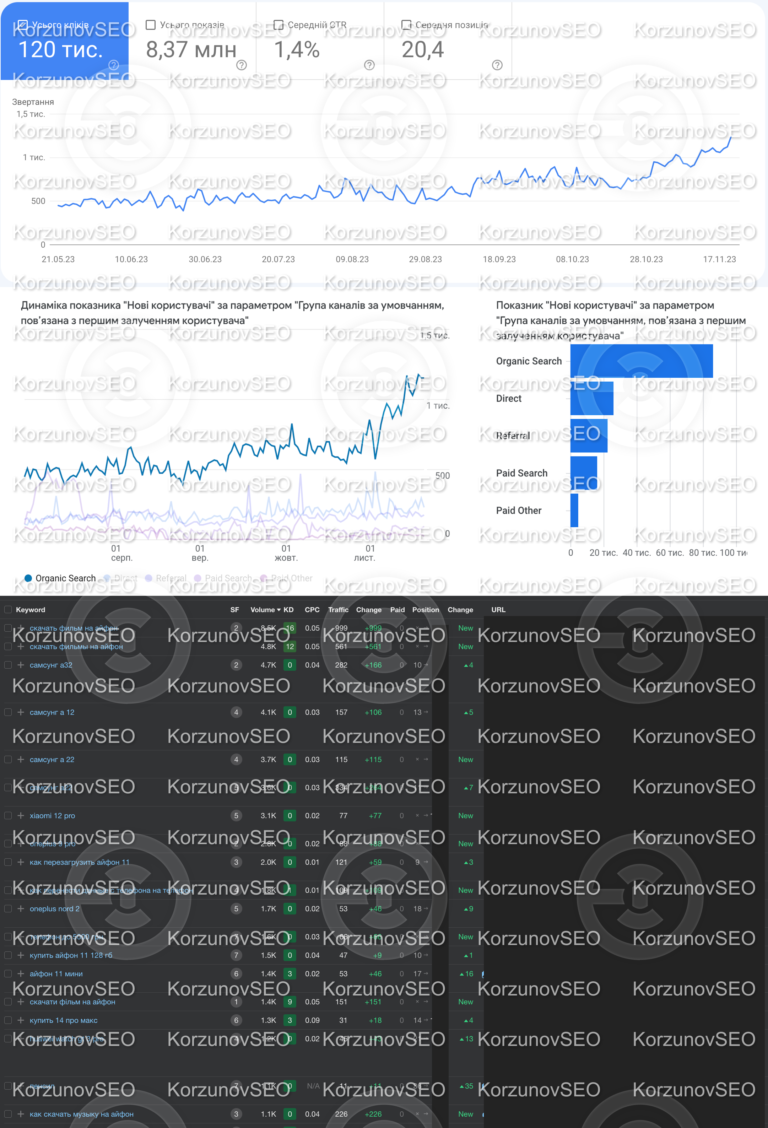
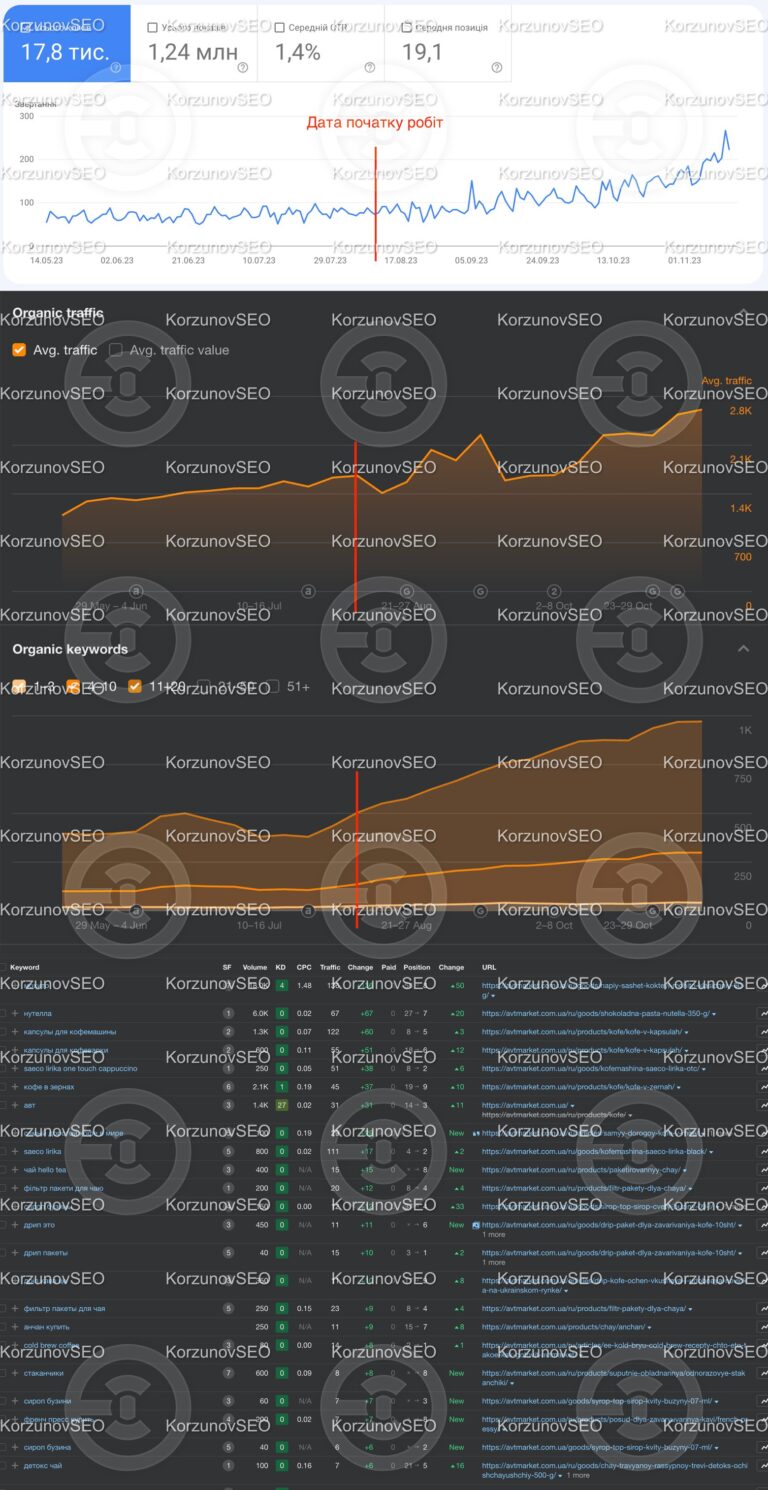
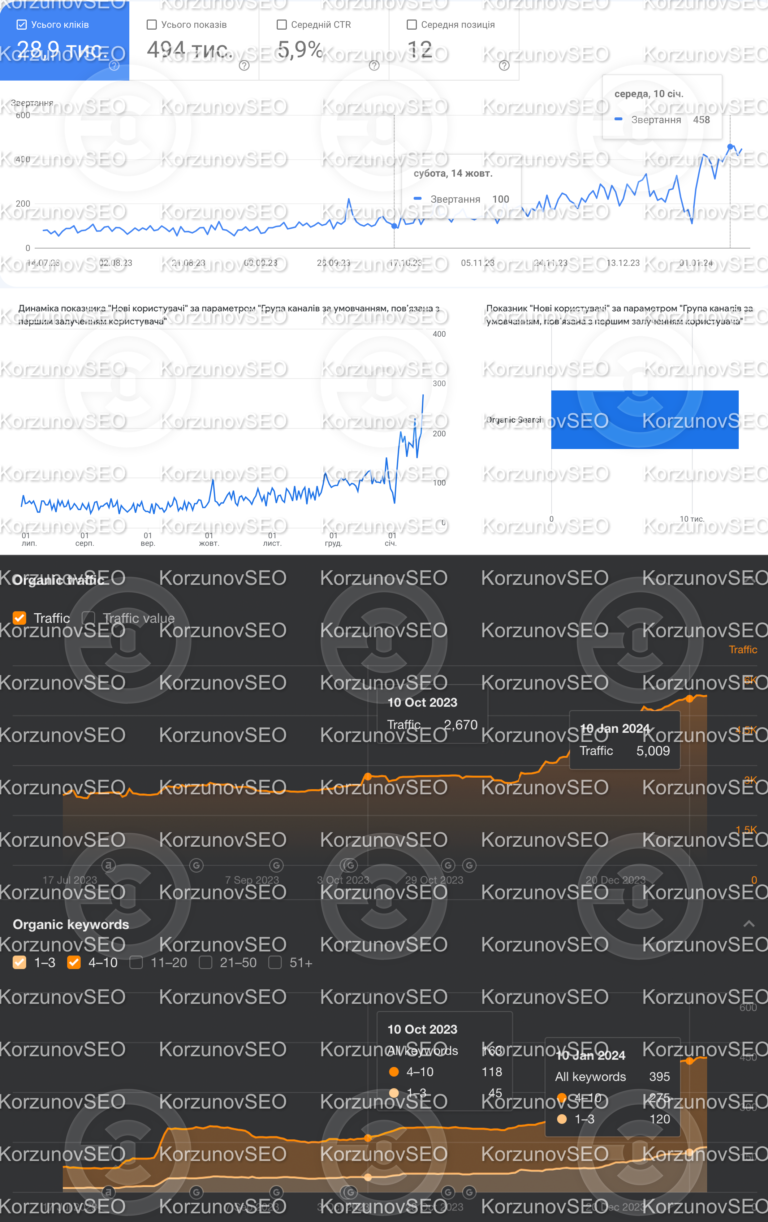
The first changes following SEO improvements can appear before leads and sales start to grow. It generally makes sense to allow a few weeks to assess how changes affect search performance, while planning organic traffic growth over a period of months. Neither three nor six months guarantees results: the website’s starting point, the work completed, and demand for what the business offers all matter.
Google explains that some changes can affect search results within hours, while others may take several months. It recommends allowing a few weeks before assessing their impact and notes that not every change produces a noticeable improvement. This is guidance for evaluating progress, rather than a promise of increased sales by a particular date. Source: Google’s SEO Starter Guide.
For a business owner, the question of timing is practical: money is already being spent, but it is still unclear when the channel will start bringing in customers. It helps to distinguish several levels of results. Fixed issues show that work has been completed. More clicks from relevant queries indicate that the site is attracting an audience. Qualified leads and paid orders help establish the value to the business.
Before starting SEO, agree on what success means, which baseline metrics to record, and when to review progress. Below, we will look at what affects the timeline, what to check in the first few months, and when the plan needs to change.
Why SEO Has No Single Timeline for Every Website
Two similar businesses can start SEO at the same time and see different trends. One website may already have service pages, search traffic, and a history of inquiries. The other may have only a homepage with a general description. The first project may need improvements to existing landing pages, while the second first needs a site structure and content. Domain age alone does not explain the difference: what the website has built up and its current condition matter.
The scope of the project also affects the timeline. Promoting one service in a specific city and developing a catalog with thousands of products involve different amounts of work. You need to consider which pages compete in the search results, how thoroughly they address the user’s query, and what your own offering lacks. If a store is missing relevant products, specifications, and delivery information, meta tags alone cannot close that gap.
Implementation speed is another factor. An audit may be delivered in month one, but its recommended changes may not go live until month four. To assess a particular change, you need to know when it appeared on the live website. Implementation delays still count toward the overall project timeline and should be visible in reports: who owns the task, what is preventing completion, and how the delay affects the plan.
Demand and the buying cycle matter too. A seasonal product may receive fewer clicks outside its peak season even if rankings improve. For complex services, time passes between the first visit and a signed contract, so sales will not necessarily grow in the same month as traffic. An SEO strategy should account for these factors alongside the business’s resources and the order in which pages will be developed.
What Happens in the First Few Months of SEO
Start by recording the current situation. Which sections already receive organic traffic? Which queries bring visitors? Which inquiries are tracked, and what does the business consider a qualified lead? If forms can be submitted but tracking events are not configured, future reports will be incomplete. If most traffic comes from searches for the company name, the overall chart may do a poor job of showing progress on new queries the business is targeting.
The first month is a useful checkpoint for reviewing how the work is organized. By then, assess whether baseline data has been collected, priority pages identified, specific tasks prepared, and implementation started. Preparation may take longer for a large project, but its scope and schedule should be agreed in advance. A lack of sales growth at this stage does not yet establish the quality of the SEO work, while the absence of a clear plan already warrants a discussion.
Once improvements are published, check the pages themselves and their presence in search. Then review query and click trends, and assess the quality of inquiries as they come in. These stages can run in parallel: one group of pages may already be receiving traffic while another is still being prepared for launch. The review process below can be used when agreeing on how the project will be managed.
| Stage | What should be completed | What the business owner should check |
|---|---|---|
| Project kickoff | Baseline metrics, goals, priority sections, and task owners are recorded | Is it clear which services or categories will be developed first, and why? |
| Initial implementation | Agreed changes and new content are published and checked | Are specific URLs, implementation dates, and evidence of completed work available? |
| Search performance review | Data is collected for affected pages and queries after implementation | Are relevant impressions and clicks appearing? Which areas remain unchanged? |
| Inquiry review | Leads, orders, and their sources are checked within the limits of available tracking | Are suitable customers getting in touch, and which pages help attract them? |
| Plan adjustment | Results, time spent, and remaining constraints are reviewed together | Which tasks should continue, which need reconsideration, and what should be checked next? |
Each stage needs its own review schedule. A form should be tested immediately after a change, the search impact of content improvements assessed using accumulated data, and sales reviewed in light of the sales cycle. For example, after two or three months of working together, a dedicated review can establish what has actually been implemented, whether enough time has passed since publication, and which hypotheses the evidence supports. This is a project management checkpoint, not a universal deadline for reaching top rankings.
How to Measure Results: Rankings, Traffic, Leads, and Sales
A useful report connects completed work to specific pages and changes in performance. Saying that “30 pages were optimized” describes the volume of work but does not establish its impact. It is more useful to see which pages were improved, when this happened, what changed for target queries, and what the specialist concludes for the next reporting period. An increase or decrease in a single overall metric needs explanation.
Search Console lets you analyze impressions, clicks, CTR, and average position by query, page, country, and device. CTR is the ratio of clicks to impressions. Businesses benefit from examining these metrics for priority areas as well as the website overall. For example, a change in average position may coincide with the site appearing for a broader range of queries, so it does not establish success or failure on its own. Source: Search Console Performance report documentation.
| Metric | What it helps assess | What to check before drawing a conclusion |
|---|---|---|
| Impressions for target queries | Whether relevant pages appear in search | Do the queries match the offering, language, and service area? |
| Clicks to priority pages | Visitors arriving from Google | Which categories or services are growing, and is the trend continuing? |
| Rankings and CTR | Visibility and clicks for selected queries | Are queries, devices, and regions comparable across the periods being reviewed? |
| Organic search visits | The volume of search traffic reaching the website | Which search engines and landing pages are included in the report? |
| Verified inquiries | The number of potential customers getting in touch | Are there duplicates, spam, or events firing without a form being submitted? |
| Share of qualified leads | How well the audience fits the business’s goals | Do these people need your services, and do your location and terms meet their needs? |
| Paid orders | The commercial outcome | Are cancellations and the delay between inquiry and purchase accounted for? |
Search Console describes interactions with search results, while Google Analytics helps you study visitor behavior on the website. To analyze Google specifically, use the corresponding organic traffic source rather than all channels combined. Search Console clicks and GA4 sessions do not have to match: the systems use different measurement rules. Significant discrepancies should be investigated separately. Source: Google’s guidance on using Search Console and Analytics together.
Consider a hypothetical example. Organic search sessions increased from 800 to 1,200, while verified inquiries rose from 16 to 18. Traffic grew by 50% and inquiries by 12.5%, while the ratio of inquiries to sessions fell from 2% to 1.5%. This calls for a closer look at new landing pages and lead quality. Perhaps the site started attracting more visitors who only need information for now. Perhaps a form developed a problem or the offering changed. The figures show what to investigate, but do not establish the cause on their own.
Compare complete, comparable periods: for example, four weeks against the preceding four, with an additional comparison to the same period a year earlier for a seasonal business. Review searches containing the company name, other queries, and the main page groups separately. Check whether analytics settings, the product range, pricing, or advertising activity have changed. The fewer inquiries you have, the more carefully you should interpret percentages: an increase from one lead to two is not enough to confidently identify a sustained trend.
Why Rankings Can Improve Without Bringing More Leads
One possible reason is targeting queries with little connection to a purchase. A how-to article may attract people who do not need a paid service. This does not make informational content useless, but it does require a different approach to evaluation. Reports should distinguish service pages, categories, products, and blog posts so that growth in one section does not hide a lack of progress in another.
Another reason involves the offering itself. A visitor finds a relevant service but cannot understand the price, process, timeline, or terms. A store may have no stock of the product, or its delivery charges and coverage may not suit the customer. Strong visibility helps bring someone to a page, but the decision to get in touch also depends on what they find after arriving.
A third group of causes involves obstacles to submitting an inquiry. A form fails on a phone, another element covers the button, there are too many required fields, or an error message is unclear. Test the entire journey: open the page, complete the fields, submit the inquiry, and make sure it reaches its intended recipient. Clicks on a phone number or messaging button are useful to track separately because they do not yet confirm that a conversation took place.
Finally, the issue may lie in how inquiries are recorded or handled. An inquiry arrived but never reached the CRM; a customer followed up through a different channel; a sales representative responded too late. Visitors may also return several days later, so the source of the last visit alone does not always describe the full path to purchase. To understand where results are being lost, compare analytics data with actual inquiries and the sales team’s work.
What Delays SEO Results
One cause of delays that you can control is the gap between recommendations and implementation. Tasks have been agreed, but the developer has no time, content is waiting for approval, and CMS access has still not been provided. In this situation, keep a shared record of each task, its priority, owner, deadline, and actual publication date. This helps identify where work has stopped and what is needed to move it forward.
Another cause is a plan that is too broad for the available resources. Trying to develop every category, several regions, and a large blog at once can leave each area without enough attention. Prioritize areas where there is demand, a suitable offering, and the capacity to create useful pages. The relationship between scope and resources is explored in more detail in the article on how much SEO costs.
Repeated changes in direction can also cause delays. For example, a site structure has been prepared, but the decision is made to rebuild the entire catalog before publishing it. Or content is rewritten again before the previous version has been evaluated. When changes are necessary, record the reason and their effect on the schedule. Otherwise, several months later, it can be difficult to establish what work was actually completed and what it was expected to achieve.
External changes also matter. Demand can be seasonal, search results change, and a site migration can lead to fluctuations while pages are recrawled and reindexed. Google recommends investigating traffic drops by date, page, and query, and comparing them with technical issues and changes in demand. A proposed cause needs evidence: events occurring at the same time are not enough. Source: Google’s guide to diagnosing search traffic drops.
When to Revisit Your SEO Strategy
Review the plan at agreed checkpoints and when specific problems arise. A broken form or important pages accidentally blocked from indexing need immediate attention. A lack of growth after recently published content should be assessed in light of the time elapsed and data available. This approach helps you respond to errors without changing direction with every fluctuation in a chart.
If progress falls short of expectations, examine the whole process. Were queries chosen that match the business? Have suitable pages been prepared for them? Were the recommendations implemented, and when? Are the pages receiving relevant impressions and clicks? What happens after visitors arrive? The answers help identify where the constraint lies and define the next task.
Repeated reports without specific changes, missing implementation dates, growth limited to irrelevant traffic, and an inability to verify inquiries all call for a serious discussion. It is also worth examining the basis of any promises: Google explicitly warns that no one can guarantee a number-one ranking. A realistic forecast should reflect the project’s current state and explain the conditions under which it may need to be revised. Source: Google’s guidance on choosing an SEO specialist.
When meeting with your SEO specialist, discuss these five questions:
- Which priority pages changed during the reporting period, and when did the updates go live?
- How did target query performance, clicks, and inquiries change for those pages?
- Which conclusions are supported by data, and which remain assumptions?
- What is currently limiting results, and who is responsible for resolving it?
- What will be done next, and how will its impact be assessed?
The discussion should produce an updated plan with task owners and review dates. Sometimes, changing priorities or removing an implementation obstacle is enough. If the reasons for a prolonged lack of growth remain unclear, an SEO audit can be a starting point. I will review the project’s current state, assess the issues against its goals, and prepare recommendations. To get started, send your website URL and briefly describe what has already been done and the results you want to achieve.
Frequently Asked Questions About SEO Timelines
Can SEO deliver results in one month?
Specific improvements can be implemented and checked within a month, and in some cases you may see changes in search. However, this may not be enough time to assess sustained lead growth. At the first checkpoint, review baseline data, completed tasks, and actual implementation dates.
If there is no growth after three months, does that mean SEO is not working?
Elapsed time alone is not enough to reach that conclusion. Establish what has actually been published, how much time has passed since the changes, and which metric is not growing. However, three months of working together is a reasonable point to request a detailed review of completed work, obstacles, and the next steps.
When does SEO start paying for itself?
The timeline depends on spending on SEO, implementation, and content, as well as the number of additional sales and their profitability. Traffic or revenue growth alone does not establish that the investment has paid for itself. First, set up reliable tracking of inquiries and sales, then compare results with costs over the chosen period.
Which matters more: rankings or leads?
For a commercial website, the ultimate value is assessed through qualified leads and sales. Rankings, impressions, and clicks help explain how the website attracts an audience and where constraints arise. These metrics serve different purposes and should be considered together.
Can a larger budget speed up SEO?
Additional resources can help prepare pages, implement technical changes, and test more well-founded hypotheses sooner. But the impact depends on where the budget is spent. If the main problem is a backlog of unimplemented tasks, commissioning more articles will not resolve it.
How often should results be reviewed?
Check errors and verify that implemented changes work as tasks arise. A monthly report is a useful place to discuss overall progress, while sustained trends should be assessed over longer, comparable periods. When traffic and lead volumes are low, more data will be needed before drawing conclusions.